
Can Financial Pressure Affect Your Clinical Judgment?
Why savings and working capital protect more than cash flow
By Dr. Eric Chatterley, DDS
MEET DR. CHATTERLEY IN DUBLIN ON OCTOBER 24
A free, highly interactive forum for prospective buyers and newer practice
owners - with small-group discussions, recent-buyer panelists and plenty
of time for your questions.
_________________________
Saturday, October 24, 2026 | 9:00 a.m. - Noon
REA & Associates Conference Center, Dublin
_________________________
FIRST 15 REGISTRANTS RECEIVE A FREE PRACTICE EVALUATION
A $5,000 value from Dr. Eric Chatterley through CTC Pathways.
The evaluation reviews not merely a practice’s financial results but also patient experience, systems & processes, team dynamics & culture, and leadership & management style. Buyers may use it for a practice they’re considering and current owners to see where to improve. This is not an appraisal.
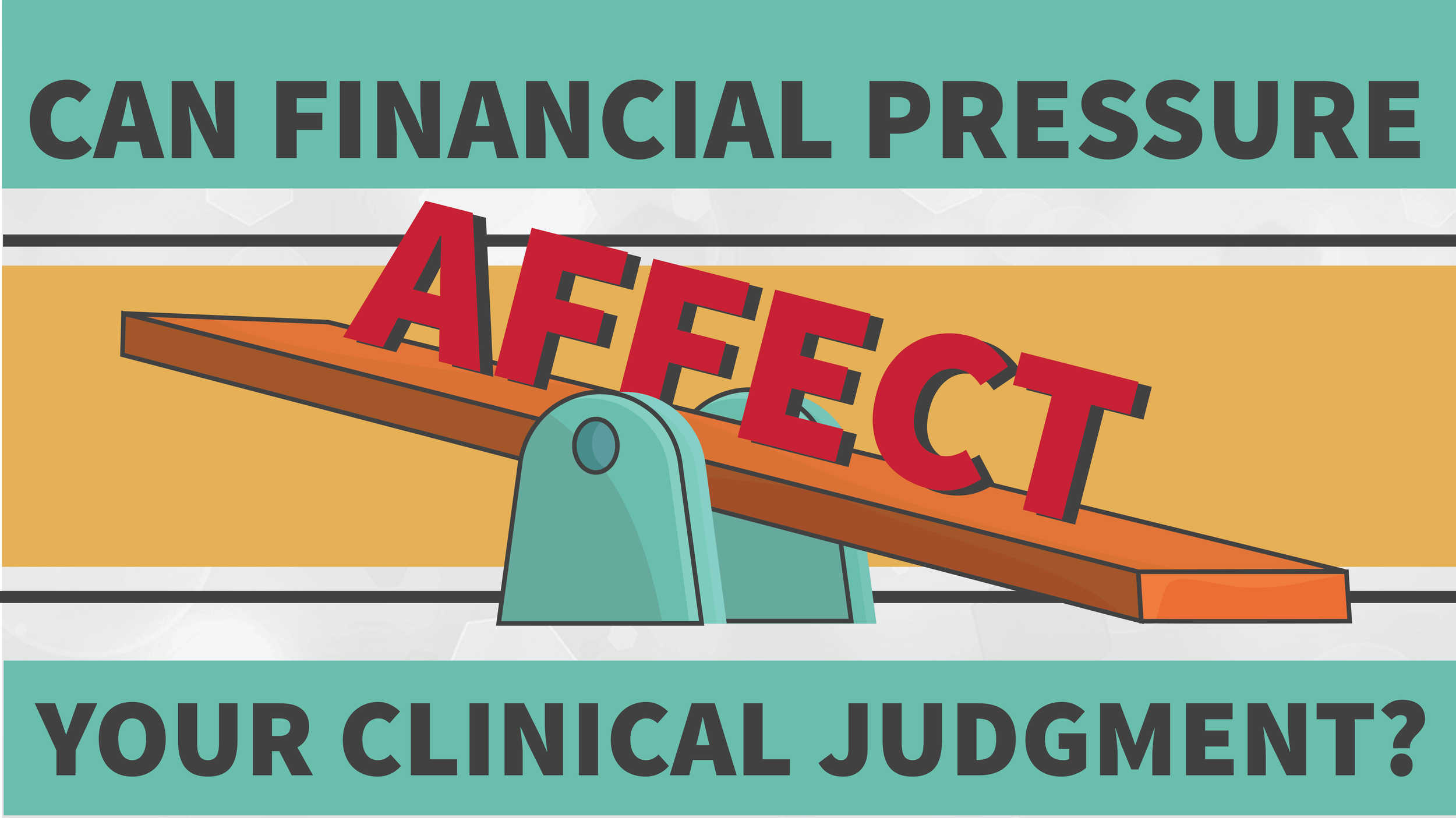
The Pressure Behind a Clinical Decision
Most dentists do not want to talk about the possibility that money could affect their clinical judgment. That is understandable. Dentists enter the profession to help people, and the great majority take their responsibility to patients seriously.
But ownership brings financial pressure that associates do not experience in quite the same way. After purchasing a practice, the loan payment arrives every month. Payroll, rent, supplies and personal obligations do not stop because collections came in below projections. When the numbers are tight, that pressure can follow the owner into the operatory.
A decision that should be entirely clinical may begin to carry financial weight. Should that questionable crown be replaced now or watched? Does a borderline condition call for treatment today? Would the more involved option truly serve the patient better? Those can be legitimate clinical questions. The danger begins when the owner's need for production quietly becomes part of the answer.
Ethical Drift Usually Does Not Feel Like a Big Decision
Few ethical problems begin with a dentist making an obviously dishonest choice. More often, the change is gradual and easy to explain away. A treatment recommendation becomes a little more aggressive. A procedure that could wait begins to feel urgent. The owner tells himself that acting now is probably safer for the patient anyway.
Any one of those decisions may be defensible. Over time, however, a pattern can develop that the dentist does not fully recognize. Financial pressure rarely announces itself. It works quietly, through a series of small decisions that each appear reasonable on their own.
Working Capital Gives You Room to Do the Right Thing
Working capital is often discussed as though it is simply a business cushion. It is more than that. Adequate savings and access to cash give an owner the freedom to make clinical decisions without wondering whether this patient must help cover next month's mortgage or payroll.
The right amount will vary with the size of the practice, the debt structure, personal expenses and the reliability of collections. A commonly discussed target is enough liquidity to cover roughly three to six months of personal and practice obligations if production falls sharply. That is not a rule for every buyer. It is a planning conversation to have with your lender, accountant and other advisors before you close.
The important point is simple: lender approval does not necessarily mean you have enough financial margin. A bank may be willing to finance the purchase while you are still personally unprepared for a slow start, an equipment failure, staff turnover or an unexpected drop in production.
Buying Sooner Is Not Always Buying Better
When financing becomes available, it is tempting to buy immediately and assume the practice's cash flow will take care of everything. Sometimes it does. Sometimes the first year brings expenses and delays that were never included in the projection.
Waiting long enough to build reserves may feel frustrating, especially when you are eager to own. But buying from a position of strength gives you choices. You can address a problem before it becomes a crisis. You can make a sound decision instead of the fastest decision. Most important, you can keep the patient's needs separate from your own short-term financial needs.
Reserves Protect More Than Treatment Decisions
Cash pressure affects the rest of the practice too. Owners who are short on working capital may postpone necessary equipment repairs, cut team benefits, delay continuing education or rush into marketing expenses they have not fully considered. Those choices can save money this month while creating a larger problem later.
A reasonable reserve gives you time to ask better questions:
Is this expense necessary?
Is there a less costly solution that does not compromise care?
What happens if we wait?
What will this decision do to the team and the practice six months from now?
If You Are Already Feeling the Pressure
Financial strain is not proof that someone is a bad owner or an unethical dentist. It is a warning that should be faced honestly. Begin by identifying exactly where the pressure is coming from. Review overhead, debt payments, personal spending, scheduling, collections and available credit with advisors who understand dental practices. Then build a realistic plan to restore financial breathing room.
Ignoring the pressure does not make it harmless. Recognizing it gives you the chance to protect your patients, your reputation and the kind of dentist you intended to be when you entered the profession.
Bring Your Questions to the Forum
If you are considering ownership or are already in your first few years as an owner, these are exactly the kinds of issues worth discussing before they become urgent. The first 15 dentists who register will also receive a complimentary Practice Evaluation from Dr. Eric Chatterley through CTC Pathways, a $5,000 value.
At the 2026 Ohio Dental Practice Ownership Forum, Dr. Eric Chatterley will lead an interactive morning built around real questions from dentists like you. You will take part in small-group discussions, hear from dentists who recently purchased practices and have time to ask the questions that cannot be answered by reading another article or watching another webinar.
The Practice Evaluation is not a formal valuation. It is a practical review of the entire practice, including financial alignment, patient experience, systems & processes, team dynamics & culture, and leadership & management style.
If you are considering a purchase, you may use the evaluation for a practice that interests you or use what you learn to identify changes you may want to make after becoming the owner. If you already own a practice, the evaluation can show you what is working and where improvement may be possible.
The Forum is purely educational and free to attend. Advance registration is required, and the complimentary Practice Evaluations are limited to the first 15 registrants.
Saturday, October 24, 2026,
9:00 a.m. until noon
REA & Associates Conference Center
5400 Frantz Road, Suite 200, Dublin, Ohio.

Dr. Eric Chatterley, DDS
Dental Coaching
Leadership Training and Mentorship
This event is made possible by the generous support of our sponsors:
Bank of America, Provide, REA & Associates, and Huntington Bank
